Long before skyscrapers touched the clouds and smartphones lit up the night, there existed a humble object that silently traveled through human history — the pillow.
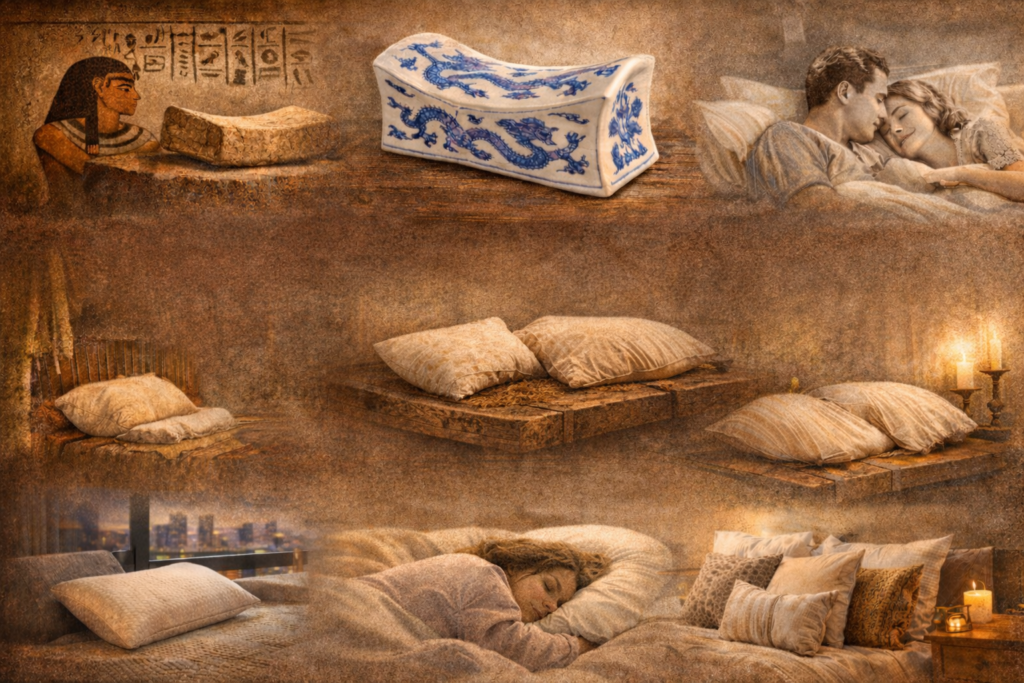
Thousands of years ago, in the ancient civilizations of Mesopotamia and Egypt, pillows were not soft at all. They were carved from stone or wood. Imagine resting your head on a carefully shaped stone block after a long day under the desert sun. It may sound uncomfortable today, but those early pillows were symbols of protection. People believed that lifting the head above the ground kept insects and evil spirits away during sleep. Even kings placed these hard pillows in their tombs, trusting them to guard their dreams in the afterlife.
Centuries passed, and the idea of comfort slowly transformed the pillow. In ancient China, pillows were crafted from porcelain, bamboo, or jade. They were beautifully decorated with paintings of mountains, dragons, and flowing rivers. A pillow was no longer just a headrest — it became a piece of art, a quiet companion beside the sleeper.
Then came the Middle Ages in Europe. Soft pillows filled with feathers or straw began appearing in homes. Yet they were considered luxuries, reserved for nobles and royalty. Ordinary people often slept without them, believing pillows were a sign of excessive comfort.
As the world modernized, the pillow evolved alongside human lifestyles. Cotton factories, textile innovations, and new materials transformed it into something universal. From the simplest homes to the most luxurious hotels, pillows became essential companions of rest.
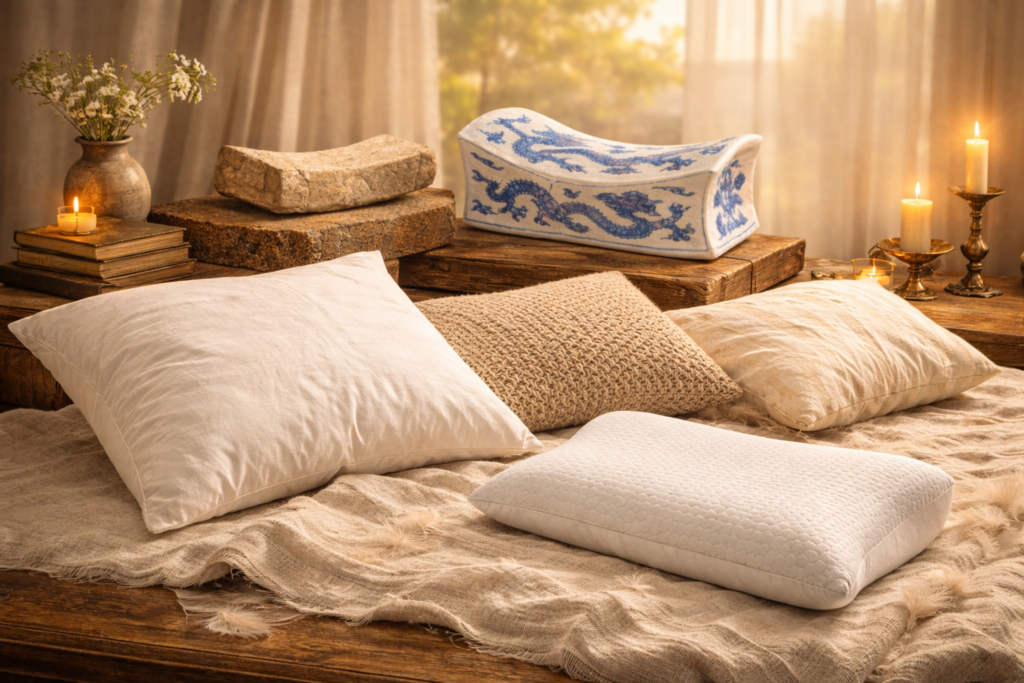
Today, the pillow lives many lives.
In a cozy apartment in Debrecen, a student might lean against one while studying late into the night. In a busy city like New York, someone rests on a memory-foam pillow after a long day chasing dreams. In a quiet village in Pakistan, a grandmother carefully arranges embroidered pillows on a wooden bed before welcoming guests.
Modern pillows are designed with science and style. Memory foam adapts to the shape of the head. Cooling gel keeps sleepers comfortable on warm nights. Decorative pillows add personality to rooms — velvet, linen, gold accents, minimalist Scandinavian styles, or elegant farmhouse aesthetics.
Yet despite all the technological progress, the pillow still serves the same gentle purpose it did thousands of years ago: it holds human thoughts at the end of the day.
Every pillow has witnessed silent stories — whispered prayers, ambitious plans, tired tears, and hopeful dreams.
When the world grows loud, the pillow remains quiet.
It simply waits.
Waiting for the moment when someone lays their head down, closes their eyes, and allows tomorrow’s dreams to begin.