This post contain affiliate links. I earn commision from qualifying purchases at no extra cost to you.
🔥 Why Room Air Purifiers Matter More Than You Think
You clean your room. You open windows. You try to keep things fresh.
Yet somehow… the air still feels heavy.
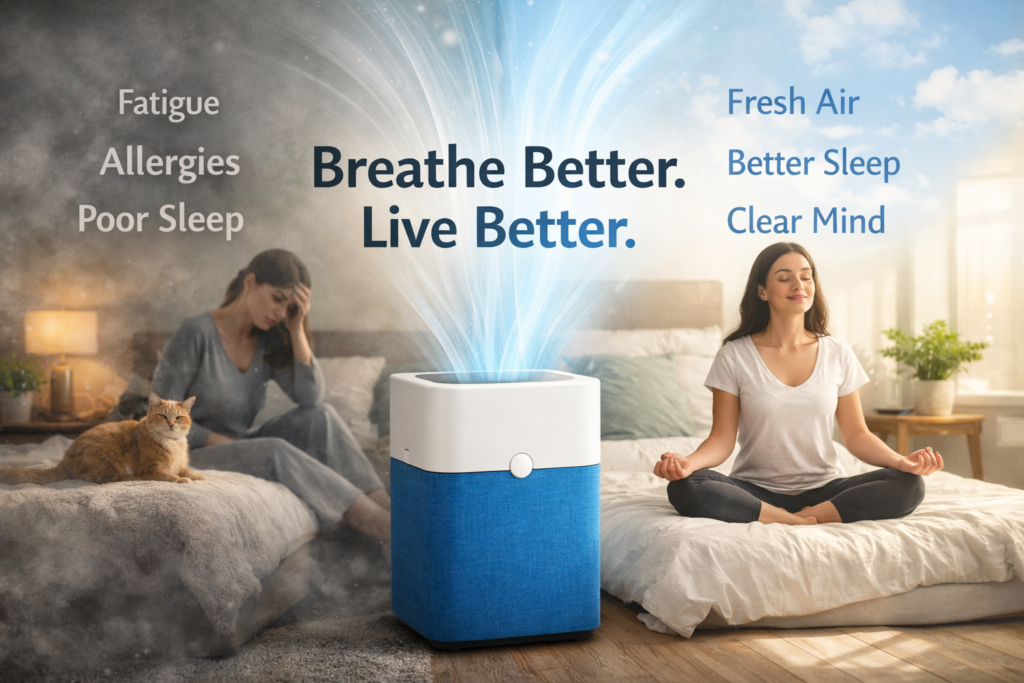
That’s because most indoor air problems are invisible—dust particles, allergens, pet dander, smoke, and even microscopic pollutants that affect your breathing, sleep, and mood.
If you’ve been searching for room air purifiers but feel confused by specs, brands, and features—you’re not alone.
This guide will simplify everything so you can confidently choose the right air purifier for your needs.
🧠 What Is a Room Air Purifier & Why It Matters
A room air purifier is a device that removes harmful particles from indoor air using filters and airflow technology.
Why it actually matters in real life:
- You breathe 15,000+ liters of air daily
- Indoor air can be 2–5x more polluted than outdoor air
- Poor air quality affects:
- Sleep quality
- Focus and productivity
- Allergies and respiratory health
👉 A good purifier doesn’t just clean air—it improves how you feel every day.
✅ What to Look For When Buying Room Air Purifiers
Choosing from the highest rated room air purifiers can still feel overwhelming. Focus on these key factors:
1. 📏 Room Size Coverage
Always match the purifier to your room size.
- Small room: up to 300 sq ft
- Medium: 300–800 sq ft
- Large/open space: 800+ sq ft
👉 If you choose too small, it won’t work effectively.
2. 🌬️ Air Cleaning Speed (CADR)
CADR (Clean Air Delivery Rate) tells you how fast air is cleaned.
- Higher CADR = faster purification
- Important for allergies, smoke, or pollution-heavy areas
3. 🧪 Filter Type (Very Important)
Look for:
- HEPA filters → capture 99.97% of particles
- Activated carbon → removes odors and smoke
💡 Some advanced systems (like HEPASilent tech) combine speed + efficiency.
4. 🔇 Noise Level
Especially important for bedrooms or study areas.
- Look for “quiet” or sleep modes
- Good purifiers work in the background without disturbance
5. ⚡ Energy Efficiency
Since it runs for hours daily, low power consumption saves money long-term.
6. 🔄 Filter Replacement & Cost
Check:
- How often filters need replacing
- Cost and availability
👉 A cheap purifier with expensive filters = bad deal.
7. 📱 Smart Features (Optional but Useful)
- App control
- Air quality sensors
- Auto-adjust modes
These make life easier but aren’t mandatory.
❌ Common Mistakes to Avoid
1. Buying Based on Price Alone
Cheap options often lack proper filtration or coverage.
2. Ignoring Room Size
A small purifier in a large room = wasted money.
3. Falling for “Fragrance = Clean Air”
Air fresheners don’t purify—they just mask odors.
4. Not Checking Filter Quality
Without HEPA-level filtration, performance drops significantly.
5. Forgetting Maintenance Costs
Always factor in long-term filter replacement.
👤 Who Should Buy What?
🧑🎓 Students / Small Rooms
- Compact purifier
- Quiet operation
- Basic HEPA filter
👨💻 Remote Workers / Professionals
- Medium coverage
- Low noise
- Consistent airflow
🐶 Pet Owners
- Strong filtration (hair + dander)
- Carbon filter for odor control
🤧 Allergy Sufferers
- High CADR
- True HEPA filtration
- Continuous operation
🏠 Large Homes / Open Spaces
- High-capacity purifier
- Fast cleaning speed
👉 This is where premium models like the BLUEAIR Blue Pure 211i Max stand out—designed to clean large areas (up to 3,048 sq ft in one hour) efficiently.
❓ Frequently Asked Questions (FAQ)
1. Do room air purifiers really work?
Yes—especially high-quality ones. They remove airborne particles like dust, pollen, and smoke, improving air quality significantly.
2. Can air purifiers help with allergies?
Absolutely. They reduce allergens in the air, which can ease symptoms like sneezing, congestion, and irritation.
3. Should I run my air purifier all day?
Yes. For best results, keep it running continuously—especially in frequently used rooms.
4. Are air purifiers noisy?
Most modern units are quiet, especially on low or sleep modes.
5. How often should filters be replaced?
Typically every 6–12 months, depending on usage and environment.
6. Can it remove viruses and bacteria?
High-quality purifiers can reduce airborne particles, including some viruses, but they are not a complete replacement for hygiene or ventilation.
7. Is a bigger purifier always better?
Not always—but for large rooms, higher capacity is essential.
8. Do I still need ventilation?
Yes. Air purifiers improve air quality, but fresh air circulation is still beneficial.
🧾 Practical Tips Before You Buy
- ✔ Always choose slightly higher capacity than your room size
- ✔ Place purifier in an open area, not behind furniture
- ✔ Keep doors/windows closed for best efficiency
- ✔ Clean pre-filters regularly (if available)
- ✔ Track air quality changes to see real impact
🎯 Final Recommendation
If you want a safe, reliable choice from the recommended room air purifiers, focus on:
- Strong coverage
- Proven filtration technology
- Quiet performance
- Long-term value
For larger rooms or serious air quality concerns, the BLUEAIR Blue Pure 211i Max is a standout option—combining power, efficiency, and ease of use.
🔗 Ready to Breathe Better?
Choosing the right room air purifier isn’t just about specs—it’s about improving your daily life.
Cleaner air means:
- Better sleep
- Better focus
- Better health
👉 Take a moment to explore trusted options like the highest rated room air purifiers, and see which one fits your space and lifestyle best. Explore Now.
Because once you experience clean air… you won’t want to go back.