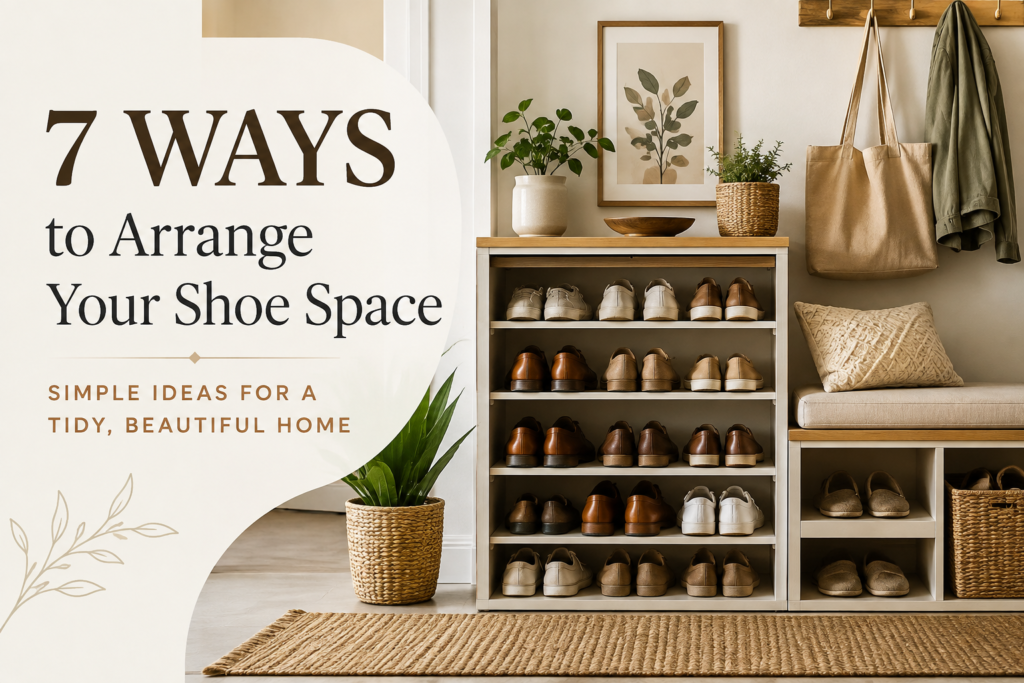
Shoes are one of those everyday things that can quietly make a home feel cluttered. A few pairs left near the entrance can quickly turn into a pile, while an oversized shoe cabinet can make a small hallway feel cramped.
The solution isn’t always more storage. Often, it is simply better arrangement.
DICLAMIER: This post may contain affiliate links, which means we may earn a small commission at no extra cost to you.
Whether you have a spacious entryway, a small apartment, or just a corner beside your bedroom door, these seven ideas can help you create a shoe space that is practical, organized, and visually pleasing.
1. Create a Dedicated Entryway Shoe Zone
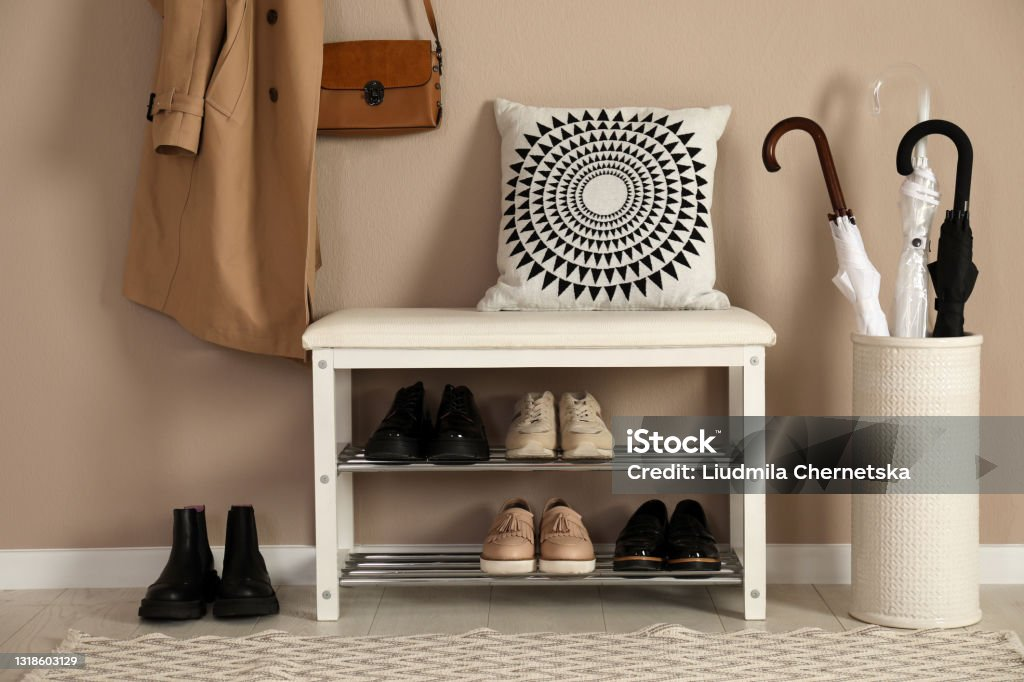
The easiest way to control shoe clutter is to give shoes a defined home near the entrance.
A compact shoe cabinet, bench with storage, or open shelving unit can keep everyday footwear together without allowing it to spread throughout the house.
Keep the pairs you use most frequently at an easily accessible height. Less frequently worn shoes can go on higher shelves or into closed storage.
The goal: make putting shoes away just as easy as taking them off.
2. Use Vertical Space
If your floor space is limited, look upward.
Tall, narrow shoe cabinets can store considerably more footwear without occupying much floor area. Wall-mounted shelves can also work well in small hallways where every centimetre matters.
Vertical storage is particularly useful for apartments and narrow entrances because it keeps the walking path clear.
Instead of asking, “Where can I fit another cabinet?”, ask:
“How much unused wall space do I have?”
Buy a cupboard organizer.
3. Arrange Shoes by Frequency of Use
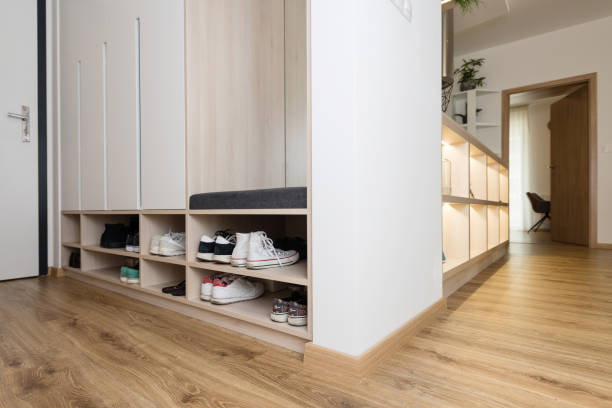
Not every pair deserves the same amount of attention.
Keep everyday shoes, slippers, and frequently worn sneakers in the easiest-to-reach section. Formal shoes, seasonal footwear, and occasional-use pairs can be stored farther away.
You could organize your space into simple categories:
- Everyday footwear
- Work or formal shoes
- Sports shoes
- Sandals and slippers
- Seasonal footwear
- Special-occasion shoes
This small change can make your shoe area much easier to maintain.
4. Add a Bench for Comfort
A shoe-storage area doesn’t have to be purely functional.
Adding a small bench creates a comfortable place to sit while putting on or removing shoes. If the bench includes storage underneath, you get two functions from one piece of furniture.
Pair it with a simple basket or concealed compartment for slippers and smaller footwear.
A bench can also make an entrance feel more intentional rather than simply being a place where shoes accumulate.
5. Keep Everyday Shoes Open, Everything Else Hidden
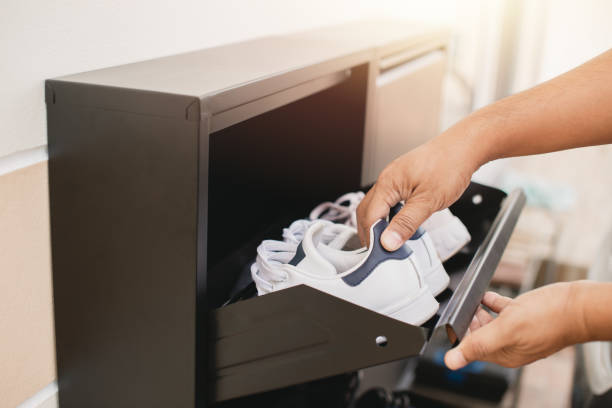
One useful approach is to combine open and closed storage.
Open shelves are convenient for shoes you wear every day. Closed cabinets are better for footwear that you don’t want constantly visible.
This creates a balance between accessibility and visual calm.
A useful rule is:
Open storage for convenience. Closed storage for visual cleanliness.
If your entrance already contains many visual elements, closed storage may be especially valuable.
6. Make Use of Small or Awkward Spaces
You don’t necessarily need a traditional shoe cabinet.
The space underneath a staircase, the back of a door, an unused hallway corner, or the area beneath a console table can sometimes become useful shoe storage.
For a very small collection, even a narrow rack may be enough.
The important thing is to design storage around the actual space you have rather than trying to force a large piece of furniture into it.
7. Don’t Store More Shoes Than You Actually Use
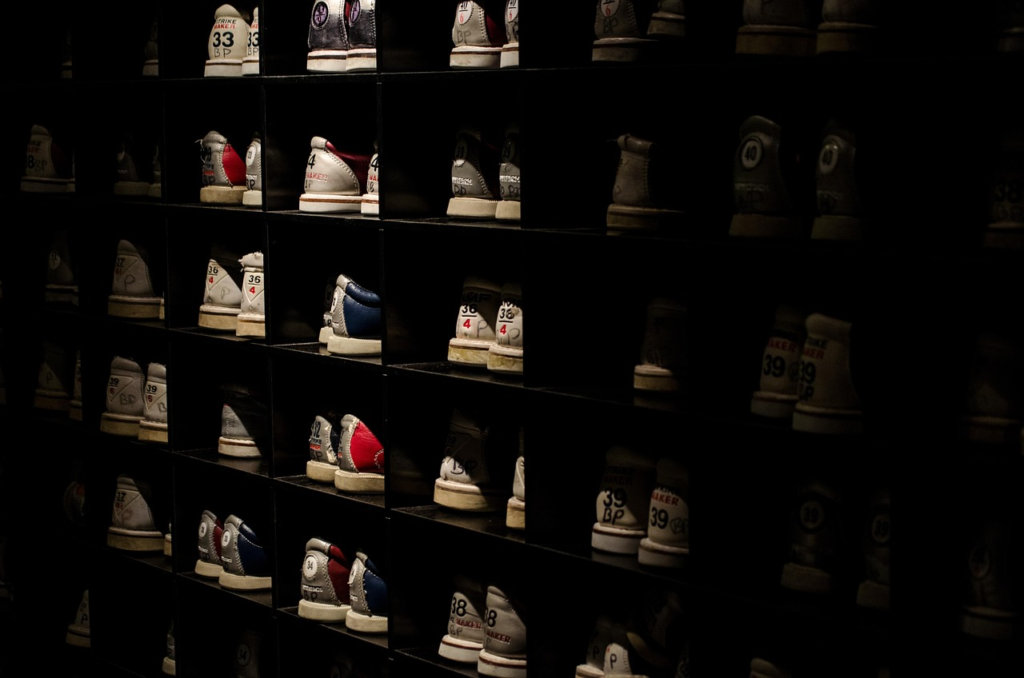
Perhaps the most important arrangement strategy is also the simplest:
Reduce the collection before increasing the storage.
Shoes that are uncomfortable, damaged, rarely worn, or no longer suit your lifestyle can gradually take over valuable space.
Every few months, review your collection and ask:
- Do I actually wear these?
- Are they still comfortable?
- Do I have another pair serving the same purpose?
- Would I buy these again today?
Keeping fewer, useful pairs makes every storage system work better.
Final Thought
A well-arranged shoe space doesn’t need to be expensive or elaborate.
The best setup is usually one that makes your daily routine effortless: your everyday shoes are easy to reach, occasional footwear is properly stored, and the entrance remains clear.
Good organization isn’t about fitting more things into your home. It’s about making the things you keep easier to live with.