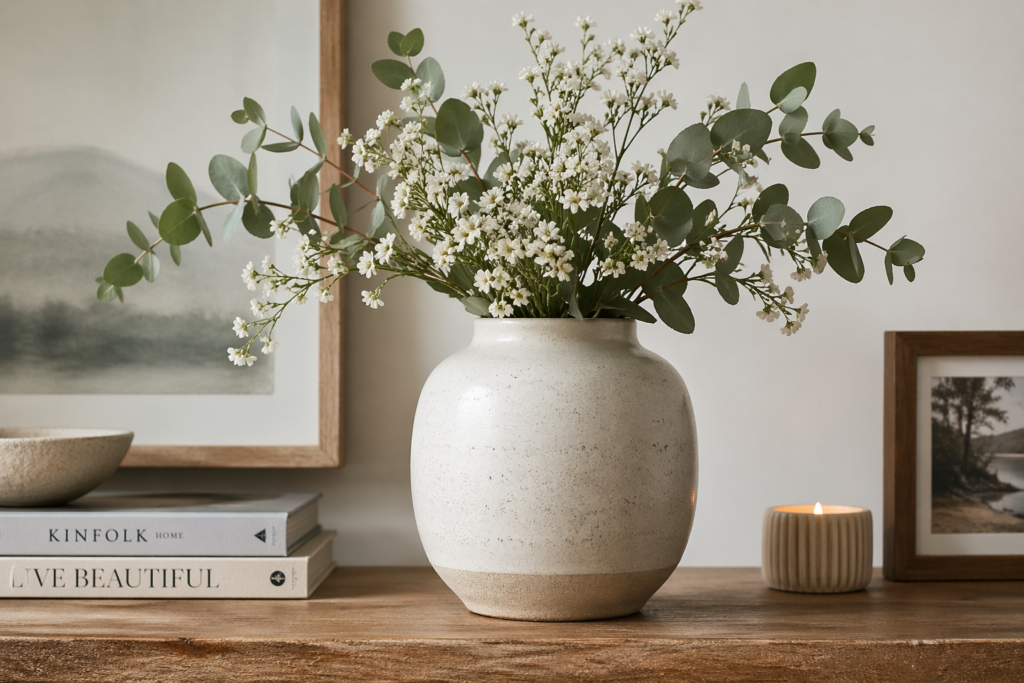
Walk into almost any home, anywhere in the world, and you’ll likely find a vase. Maybe it’s tucked onto a windowsill catching the afternoon light, or standing proudly at the center of a dining table, holding a bouquet that’s just beginning to open. It’s easy to overlook a vase—to see it as merely functional, a container for flowers—but that misses the deeper story entirely.
A vase is not just an object. It’s a stage, a storyteller, a subtle architect of atmosphere. And once you start paying attention, it becomes one of the most fascinating and transformative elements in a home.
A Vessel for More Than Flowers
At its simplest, a vase holds something. But what it really holds is intention.
An empty vase is not empty—it’s full of possibility. It invites you to notice your surroundings more closely. A walk outside becomes a treasure hunt: a fallen branch, a few wildflowers, a single dramatic leaf. Suddenly, you’re not just decorating—you’re curating moments from the world and bringing them inside.
Even without anything in it, a vase can stand alone as a sculptural piece. Its shape, color, and texture quietly influence the mood of a room. A tall, narrow vase creates elegance and vertical movement. A round, low one feels grounded and calm. A rough ceramic surface adds warmth; smooth glass brings lightness.
The vase is both container and statement.
The Art of Choosing a Vase
Choosing a vase isn’t about matching—it’s about dialogue.
Ask yourself:
- Does this vase whisper or does it speak boldly?
- Does it blend into the space, or does it anchor it?
- What feeling does it create when I look at it?
A minimalist interior might benefit from a single, striking piece—something asymmetrical or unexpected. A cozy, layered home might call for a collection of smaller vases, each with its own personality.
Materials matter, too. Glass plays with light and transparency, making spaces feel open. Ceramics bring earthiness and tactility. Metal vases add a hint of structure and shine. Even unconventional materials—wood, stone, recycled elements—can turn a simple vessel into a conversation piece.
There’s no “correct” choice. The right vase is the one that makes you pause, even briefly.
Styling: Where Creativity Lives
This is where things get interesting.
You don’t need a florist’s expertise to create something beautiful. In fact, the most compelling arrangements often feel slightly imperfect—organic, unforced, alive.
Try this:
- Use fewer stems than you think you need. Space creates elegance.
- Mix heights and textures. Contrast is your friend.
- Let something lean, bend, or fall naturally instead of forcing symmetry.
And don’t limit yourself to flowers.
Branches can feel architectural. Dried grasses add softness and movement. Even a single stem—placed thoughtfully—can have more impact than a full bouquet. There’s a quiet confidence in restraint.
You can also play with negative space. A striking vase with nothing in it can be just as powerful as a filled one, especially when placed where light or shadow interacts with its form.
Seasonal Shifts, Subtle Transformations
One of the most delightful things about vases is how easily they let your home evolve.
In spring, they might hold fresh blooms bursting with color. In summer, airy greens or wildflowers. Autumn invites warm tones—dried leaves, wheat, branches. Winter can be minimal: bare twigs, evergreen sprigs, or even nothing at all, letting the vase itself take center stage.
These small changes create rhythm in your space. They make your home feel alive, responsive, in tune with the world outside.
The Emotional Layer
Here’s something people rarely talk about: vases carry memory.
A vase gifted by a friend. One picked up on a trip. One inherited, slightly chipped but full of history. These objects quietly hold stories, and every time you see them, those stories resurface.
Even the act of arranging a vase can be grounding. It asks you to slow down, to notice shape and balance, to engage your senses. In a fast-moving world, that’s no small thing.
Breaking the “Rules”
If there’s one rule worth keeping, it’s this: there are no rules.
Use a vase in unexpected places—a bathroom shelf, a bedside table, a hallway corner. Use multiple vases together, or just one. Fill them, leave them empty, swap them often, or keep the same arrangement for weeks.
A vase doesn’t demand perfection. It rewards curiosity.
A Final Thought
It’s easy to chase big transformations when thinking about home design—new furniture, bold renovations, dramatic changes. But often, it’s the smallest objects that have the deepest impact.
A vase asks very little of you. And yet, it offers so much: beauty, flexibility, creativity, and a subtle invitation to see your space—and your world—with fresh eyes.
So next time you pass by a vase, don’t just glance at it.
Pause.
Look closer.
What could it become?