Warm vs Cool Room Lamps: How Lighting Affects Mood, Sleep, and Productivity
“This post contains affiliate links; I may earn a small commission if you make a purchase at no extra cost to you.”
The Power of Lighting in a Room
Lighting plays a powerful role in how a room feels. A beautifully decorated space can still feel uncomfortable if the lighting is too harsh or too dim. Room lamps are more than just sources of light; they shape the atmosphere, influence mood, and even affect our psychology. Among the many lighting options available today, two main styles dominate interior design: warm lamp light and cool white lamp light. Understanding the difference between these two can help you design a space that feels both beautiful and emotionally comfortable.
Warm Lamp Light: Creating Comfort and Relaxation
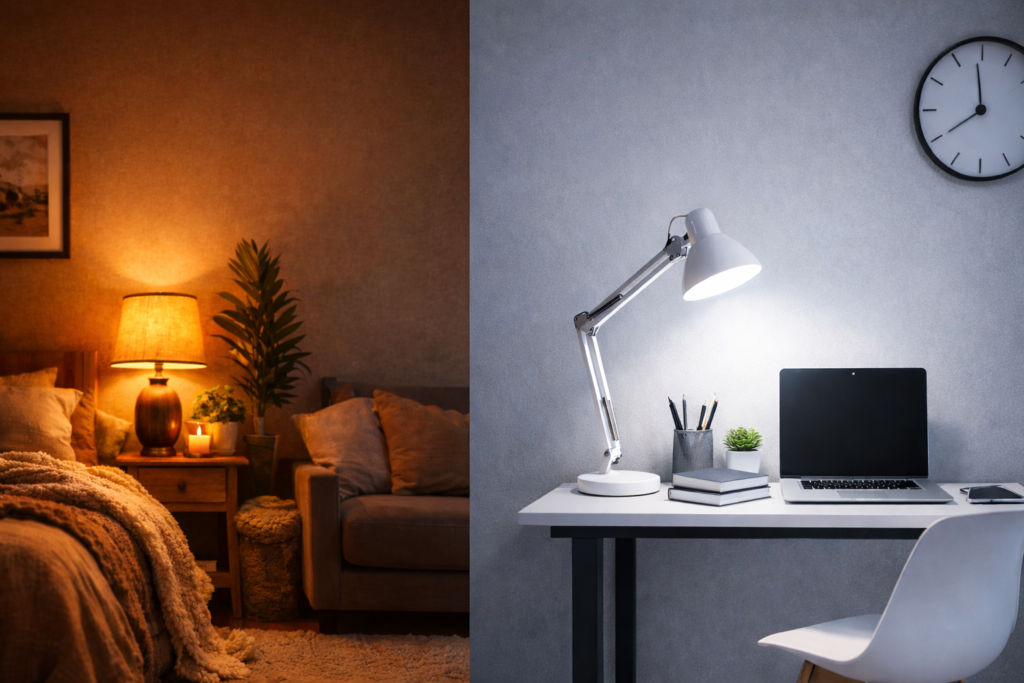
Warm lamp light produces a soft golden or slightly brownish glow that instantly creates a cozy atmosphere. This type of light is commonly used in bedrooms, living rooms, and relaxation areas because it mimics the natural warmth of sunset or candlelight. Psychologically, warm lighting signals the brain that it is time to slow down and relax. Studies in environmental psychology suggest that softer lighting reduces stress and helps the body transition into a calmer state. That is why warm light is often associated with comfort, hospitality, and emotional warmth. When people come home after a long day, a warm lamp can transform the room into a peaceful retreat where the mind can rest.
Many people prefer warm lighting for evening routines because it supports natural sleep patterns. Bright white light late at night can interfere with the body’s production of melatonin, the hormone that prepares the body for sleep. Warm lighting, on the other hand, is gentler on the eyes and creates a soothing environment ideal for reading, relaxing, or spending quiet time with family.
A good example of a warm lighting option is the ONEWISH Touch Bedside Lamp for Bedroom, 3-Way Dimmable Farmhouse Table Lamp with Fabric Shade. This lamp is designed to create a soft and relaxing glow while also providing adjustable brightness levels through its touch control. The fabric shade diffuses light gently, making it ideal for bedside tables, reading corners, or cozy living rooms. Its farmhouse-style design also adds a decorative element to the room, blending comfort with interior style.
If you would like to explore this warm lighting option, click here.
Cool White Lamp Light: Enhancing Focus and Energy
Cool white lamp light creates a completely different experience. Instead of a soft golden glow, cool light appears brighter and clearer, often resembling natural daylight. This type of lighting is popular in workspaces, study rooms, and offices because it stimulates alertness and concentration. Psychologically, cooler light signals the brain to stay active and focused. It enhances visibility, improves attention to detail, and can make a room feel fresh and energetic.
Cool lighting can be especially helpful in areas where tasks require focus, such as reading, writing, studying, or working on a computer. The brightness improves contrast and reduces visual fatigue during detailed activities. Many modern homes now include cool desk lamps or task lamps to create a productive workspace within the house.
A strong example of this type of lighting is the Light Therapy Lamp 11000 Lux, LED UV-Free Sunlight Lamp with Full Spectrum Light and 10 Adjustable Brightness Levels. This lamp is designed to simulate natural daylight and provide bright, clear illumination that supports focus and mental energy. With adjustable brightness settings and a retractable floor design, it works well for home offices, study areas, or workspaces where consistent lighting is important. Many people also use this type of lamp during darker seasons to maintain mood and energy levels.
If you want a brighter and more focused lighting environment, click here.
Choosing the Right Lighting for Your Space
Choosing between warm and cool lighting ultimately depends on how you use the room. Warm light is perfect for spaces designed for comfort, relaxation, and social connection, while cool light works best in areas where concentration and productivity are important. Interior designers often recommend using a combination of both. A room may include a cool desk lamp for working during the day and a warm ambient lamp for relaxing in the evening. This layered lighting approach allows a single space to support different moods and activities throughout the day.
Lighting as Part of Interior Design
Room lamps also serve as visual elements that enhance the overall aesthetic of a space. The right lighting can highlight textures, soften shadows, and create depth within a room. A warm lamp can make a bedroom feel intimate and inviting, while a cool lamp can give a workspace a clean and modern appearance. By understanding how light influences both mood and perception, it becomes easier to choose lamps that align with the purpose of each room.
Final Thoughts: Balancing Comfort and Productivity
In the end, lighting is not just a practical necessity but an emotional design tool. A simple lamp has the power to change the entire feeling of a space. Warm light can wrap a room in calmness and comfort, while cool light can energize the mind and inspire productivity. When used thoughtfully, these two styles of lighting can work together to create a home that feels balanced, functional, and deeply welcoming.